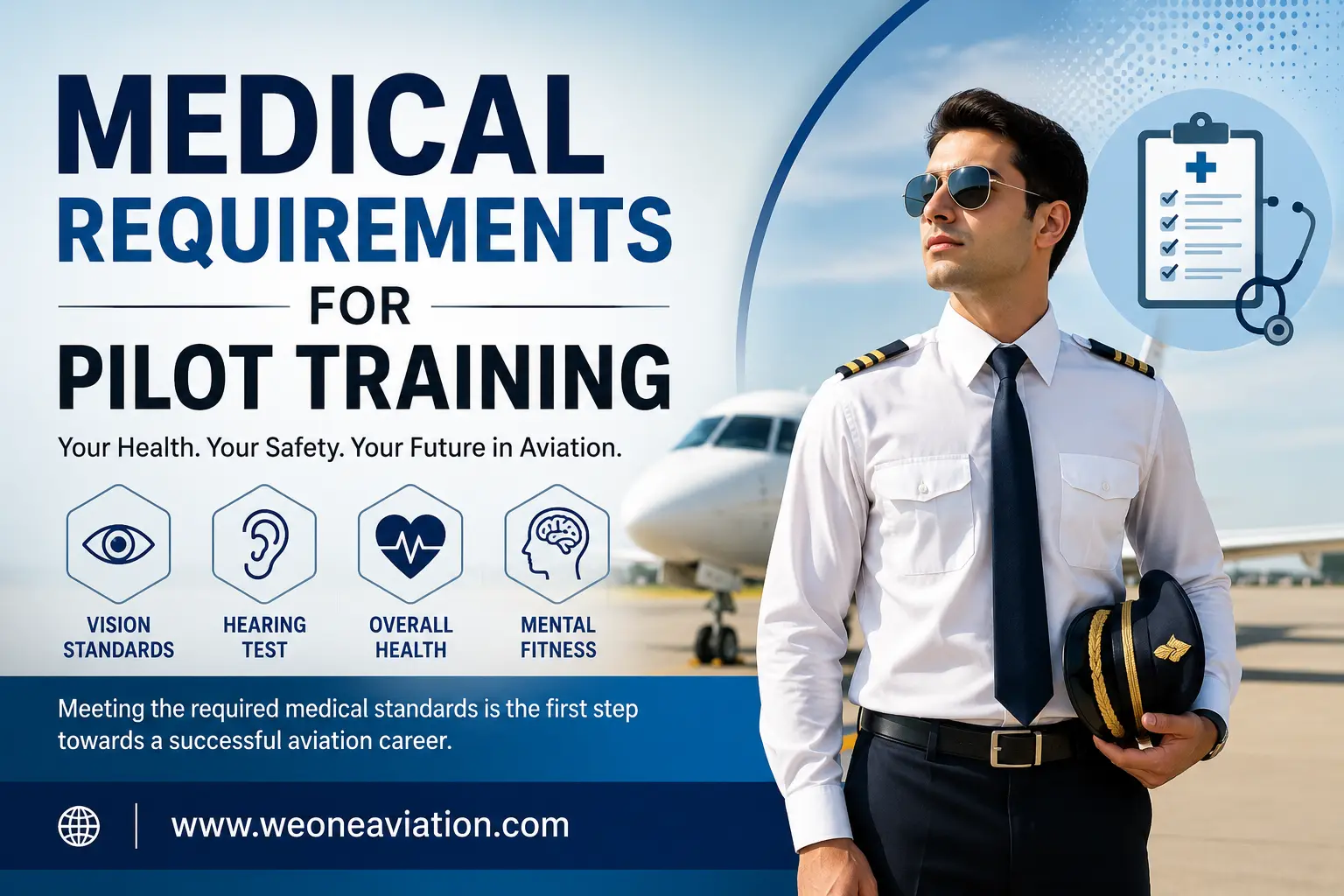
Medical Requirements for Pilot Training
Getting into commercial piloting ranks as one of the most satisfying professions for those who love flying. Before embarking on the journey of getting a Commercial Pilot Licence (CPL), it is imperative to know about the health requirements that have been set by the Directorate General of Civil Aviation (DGCA). Such requirements ensure that all pilots are healthy enough to fly an aircraft. It is the first step and perhaps the most important one in pilot training when it comes to fulfilling health requirements. At We One Aviation, we guide all aspiring pilots on the DGCA medical process.
Why Medical Fitness is Important for Pilot Training
Piloting requires sound physical health, sharp decision-making skills, and alertness of mind. Pilots may have to operate aircraft under different weather conditions and stressful circumstances and on long-haul flights. A complete medical check-up will help determine if the person has the necessary health criteria for performing such duties. The medical tests conducted by the DGCA ensure that the pilots can carry out both normal and emergency tasks without putting the lives of passengers at risk.
Good health is a criterion not only to be met while applying for a Commercial Pilot License but is also required from time to time during a pilot’s career. Good health becomes an essential criterion even after acquiring a pilot license.
Understanding DGCA Medical Certification
DGCA oversees all civil aviation activities in India and has set stringent medical standards for pilots. Such stringent standards have been set to ensure that the pilots have the necessary physical and psychological fitness to carry out their tasks under all possible circumstances.
Medical certification is a continuous process in which the pilot needs to undergo renewal of his/her medical certification from time to time. This would ensure that any possible medical problem is identified and at the same time, ensure compliance with aviation safety standards.
The Need for Medical Fitness in Aviation
Flying of an aircraft requires much more than just handling flight controls. There are many other aspects to be considered such as monitoring the cockpit instruments, communicating with air traffic controllers, analyzing the weather reports, dealing with various flight conditions and taking important decisions during unexpected scenarios. Any medical condition even if it is minor may lead to flight safety hazards if not detected.
DGCA medical examination would ensure that the aspiring pilots are medically fit with the necessary physical stamina, good eyesight, good hearing ability, cardiovascular fitness, psychological fitness, neurological fitness and overall good health.
Types of DGCA Medical Examinations
DGCA demands that trainee pilots undertake two important medical examinations throughout their course of learning. These are Class 2 Medical Examination, which is normally undertaken prior to joining the flying school. Class 2 medical examination assesses the fitness of the candidate to start pilot training and it involves thorough evaluation of vision, hearing, blood pressure, heart, breathing, nervous system, and overall physical fitness.
Subsequent to Class 2 Medical and successful flight training, trainees need to undertake the Class 1 Medical Examination. This is an important medical examination that is undertaken at DGCA approved medical centers. This examination is a must pass for obtaining Commercial Pilot License.
- Pilot training in delhi
- Cpl ground classes in delhi
- Dgca ground classes in delhi
- Pilot training in dwarka
- Cpl ground classes in dwarka
- Dgca ground classes in dwarka
Vision Requirements for Aspiring Pilots
Vision is an extremely important aspect for ensuring safety in aviation. Pilots need good eyesight in order to be able to see instrument readings, system status of the aircraft, and objects in front of the aircraft. Pilots are permitted to use corrective lenses as long as the corrected vision complies with DGCA standards.
People who do not have any problems with their vision and have acceptable vision correction methods should not face any problems. Otherwise, people with eye diseases can be referred to a specialist for additional medical tests..
Hearing Standards
Pilots need to have good hearing capabilities in order for them to be able to communicate well with other people including air traffic controllers, crew members, and passengers. In the medical tests that pilots undergo, hearing tests are carried out to determine whether they will be able to hear instructions properly without any problem.
Requirements for Physical Fitness
Medical checkups conducted by DGCA involve a complete physical examination, including tests for heart health, respiratory health, blood pressure levels, neurological health, muscular-skeletal system and general fitness. Candidates must not suffer from diseases that might cause sudden impairments of their ability to handle the aircraft.
Doctors will assess past and present medical history, surgeries, diseases, medication use, and other lifestyle factors that may affect aviation safety. Good body weight, exercise, and proper nutrition can contribute to good medical fitness.
Medical Conditions and Medical Fitness for Pilots
A lot of potential pilots wonder whether they can be accepted for Pilot Training programs if they need glasses or have some minor health problems. It is good news for many applicants because there are several common medical conditions that are acceptable in their controlled form. They include controlled hypertension, corrected eyesight, allergy, and other medical problems.
Severe cardiovascular problems, uncontrolled diabetes, serious neurology, some types of mental illness, addictions, vision problems, and similar medical problems can influence your chances to get a medical certificate.
Preparation for DGCA Medical Examination
Preparation for the medical examination starts with adopting a healthy lifestyle. Good sleep, proper diet, physical activity, hydration, and refraining from tobacco and heavy alcohol consumption play a great role in good health. It is important for the candidates to get the necessary laboratory studies done prior to the examination and to be honest about their health status with the physician.
Awareness of the medical standards beforehand can help minimize stress and enable the candidates to concentrate on reaching their aviation objectives.
Why Choose We One Aviation
Selecting the proper aviation institute plays an essential role in the pilot training experience of a student pilot. Guidance related to DGCA medicals, admission process, documentation, career counseling, and CPL training is provided by We One Aviation to aspirants in aviation who are keen to become a licensed pilot in the future. The institution guides aspirants from understanding the eligibility requirements for being medically fit to undergoing all kinds of pilot training processes to become a professional pilot.
| Medical Requirement | Details |
| Initial Medical | DGCA Class 2 Medical Examination |
| Final Medical | DGCA Class 1 Medical Examination |
| Vision | Corrected vision acceptable as per DGCA standards |
| Hearing | Normal hearing ability required |
| Physical Fitness | Healthy cardiovascular, respiratory, neurological, and musculoskeletal systems |
| Mental Health | Stable psychological condition required |
| Validity | Medical certificate must remain valid throughout training and professional flying |
Medical fitness is undoubtedly one of the most significant cornerstones of a good aviation career. The awareness of the DGCA medical criteria even before you begin your training is very useful for future pilots because it will help them save time and be well-prepared. All aspects of this examination are aimed at providing flight safety, including vision, hearing, physical, and mental fitness of the individual. With the right instructions from professional aviation specialists from We One Aviation, you are getting close to your dream of becoming a Commercial Pilot.
Frequently Asked Questions (FAQs)
1. Is DGCA Class 2 Medical mandatory before joining pilot training?
Yes. Most aviation academies recommend completing the DGCA Class 2 Medical before beginning flight training to confirm your medical eligibility.
2. Can I become a pilot if I wear spectacles?
Yes. Corrective glasses or contact lenses are generally accepted if your vision meets DGCA standards after correction.
3. What is the difference between Class 1 and Class 2 Medical?
Class 2 Medical is the initial fitness assessment, while Class 1 Medical is a more detailed examination required before obtaining a Commercial Pilot Licence.
4. How long is a DGCA medical certificate valid?
The validity depends on the class of medical certificate and the pilot's age, with periodic renewals required as per DGCA regulations.
5. How can We One Aviation help with DGCA medical preparation?
We One Aviation provides complete guidance regarding DGCA medical procedures, documentation, counselling, and pilot training support to help students begin their aviation careers with confidence.